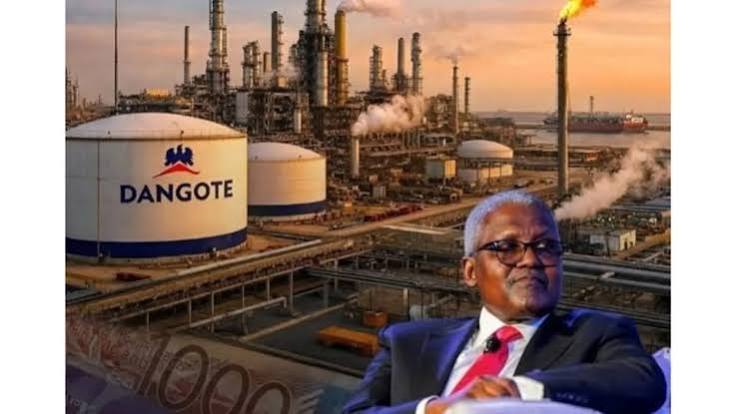
In a historic move set to redefine East Africa’s energy landscape, Africa’s richest man, Aliko Dangote, has officially selected Lamu Island, Kenya, as the site for his next mega-refinery. The 700,000-barrel-per-day (bpd) facility will become East Africa’s largest refinery and one of the most significant industrial investments in the region’s history.
After months of speculation over whether the project would land in Kenya or Tanzania, Dangote Industries confirmed the decision in early July 2026, putting an end to widespread rumors. The announcement signals a new era for regional energy security and economic transformation.
Location: Why Lamu?
The refinery will be built on Lamu Island, off Kenya’s northern coast. The location offers direct access to international shipping routes and complements Kenya’s long-term strategy of developing the Lamu Port-South Sudan-Ethiopia Transport (LAPSSET) corridor as a regional trade and energy gateway.
Kenya was chosen over Tanzania’s port city of Tanga after careful evaluation of infrastructure availability, logistics efficiency, and market access. According to Edwin Devakumar, Vice President for Oil and Gas at Dangote Industries, “Kenya was the choice from the beginning”.
Project Scale: A $17 Billion Game-Changer
The proposed refinery represents an investment of approximately Sh2.2 trillion (about $17 billion), making it one of the largest private industrial investments ever proposed in the region. Its scale is comparable to Dangote’s flagship refinery in Nigeria, which ultimately cost more than $20 billion.
Key specifications include:
- Processing capacity: 700,000 barrels per day
- Cost: Estimated at $17–20 billion
- Status: East Africa’s largest refining facility
- Construction timeline: Expected to take 30 months to three years
Industry analysts believe the Lamu refinery could exceed the combined refining capacity of existing facilities in East Africa, fundamentally altering the region’s dependence on imported petroleum products.
Groundbreaking Date: What We Know
Kenyan President William Ruto has confirmed that a groundbreaking date has been set for the Dangote refinery project, though the specific date has not yet been publicly disclosed.
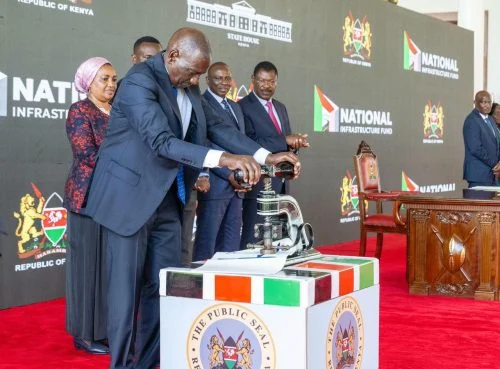
Speaking at State House while signing the Sovereign Wealth Fund Bill into law, President Ruto stated: “We have set a date for the groundbreaking ceremony. We are taking steps to take Kenya to be a first-world nation”.
The President has appointed Deputy President Kithure Kindiki to chair a high-level government committee overseeing the project’s implementation, coordinating with private sector investors.
Financing: A New Model for African Infrastructure
Dangote Industries has unveiled an innovative financing structure for the Lamu refinery, combining:
- Internal cash flow from the group’s diverse businesses
- Bond issuances in international capital markets
- Proceeds from a planned Initial Public Offering (IPO)
The Kenyan government has allocated Sh21.5 billion as seed capital in the 2026/27 Budget, with the bulk of financing expected from private investors under a public-private partnership arrangement.
This marks a shift from the financing model used for the Lagos refinery, which relied primarily on internal funds and bank loans. The company plans to list shares in its refineries, opening investment opportunities to African investors.
Strategic Significance: Reshaping Regional Energy Security
The Lamu refinery carries profound strategic importance for East Africa, where most countries rely heavily on imported refined petroleum products—mainly from the Middle East, India, and Europe. Kenya alone imported about 40 million barrels of petroleum in 2025.
President Ruto captured the urgency: “We do not want to be held hostage by the Strait of Hormuz”.
Once operational, the refinery will:
- Supply petrol, diesel, aviation fuel, and other refined products to Kenya and neighbouring countries
- Reduce East Africa’s dependence on imported fuels
- Strengthen regional energy security and reduce vulnerability to global petroleum market disruptions
- Position Kenya as a regional energy hub serving Uganda, Tanzania, Rwanda, Burundi, South Sudan, eastern DRC, and parts of the Horn of Africa
- Create thousands of jobs and attract supporting industries
Part of a Bigger Vision
The Lamu refinery is one stage of Dangote’s broader Vision 2030 strategy to build total refining capacity of 2.1 million barrels per day and generate $100 billion in annual group revenue.
The company plans to expand its Nigerian refinery from 650,000 bpd to 1.4 million barrels per day by 2028—a move that would make it the largest refinery in the world.
Already, Dangote’s Lagos refinery has transformed Nigeria from a net importer into a net exporter of refined petroleum products, exporting aviation fuel to markets in the United States, Europe, and Brazil.
What’s Next?
Preliminary work is already underway at the Lamu site. Soil tests are ongoing, and design and engineering work has commenced.
The next major milestone will be the groundbreaking ceremony, after which full-scale construction will begin. The project is expected to take approximately 30 months to three years to complete.
For Kenya and East Africa, the Dangote refinery represents more than just an industrial project—it is a bold step toward energy independence, economic transformation, and regional integration.
Stay tuned for updates on the groundbreaking date and construction progress as Africa’s next energy giant takes shape on the shores of Lamu.
📄 Disclaimer
This article is based on publicly available information from official government communications, project reports, and credible media sources. While every effort is made to ensure accuracy, project details such as timelines, costs, and implementation status may change over time.